Carbon footprint *
KG CO₂e / KG
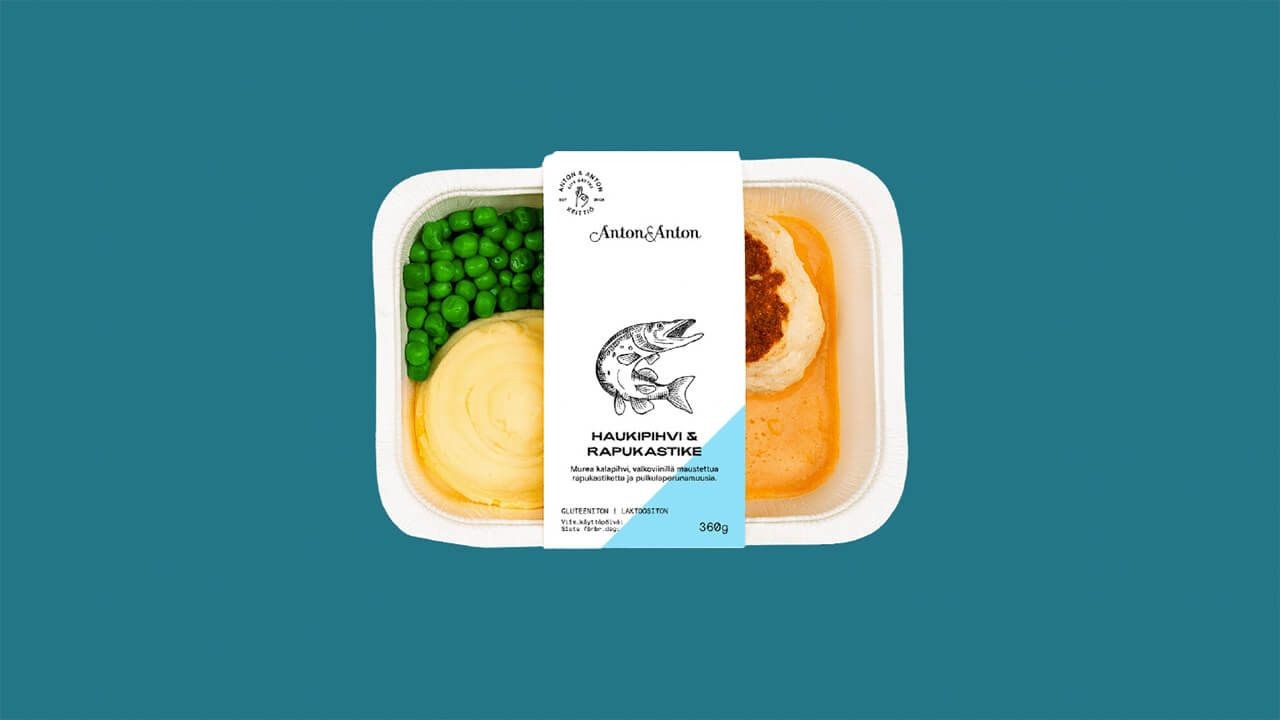
Pike steak & crayfish sauce
Pike steak from wild-caught pike, white wine-flavored crayfish sauce, and potato purée. Utilizing wild fish, such as pike, prevents eutrophication. The carbon footprint of wild fish is also smaller than, for example, farmed fish. In our opinion, despite its excellent flavor, pike is undervalued, and that's why we have developed it into an easily approachable form in this delicious classic dish.
Product category & Tags
Info
* Carbon footprint
This product carbon footprint represents the amount (kg) of net greenhouse gas emissions (carbon dioxide, methane, nitrous oxides) in carbon dioxide equivalents (CO2e) into the atmosphere per amount (kg) of produced functional product. The carbon footprint is a measure of climate impact (impact category), expressed as the product’s global warming potential over 100 years, GWP 100. The reduction of greenhouse gas emissions and concentrations in the Earth’s atmosphere mitigate global warming and climate change.
Life cycle assessments (LCA) of the product are made from cradle to gate (raw materials to packaged end-products) and include all fossil emissions, GWP fossil, resulting from the product’s production. Biogenic emissions and removals, GWP biogenic, including land-use, land-use changes and biogenic methane, are calculated and reported separately. When product-specific values are not presented, biogenic emissions and removals are disregarded or regarded as having net-zero climate impact (emissions = removals). Thus, the product carbon footprint represents carbon footprint (fossil), unless otherwise stated.
For scale, the cradle-to-gate carbon footprint values of common food products at usual points-of-purchase are estimated to have a range of approximately 0-40 kgCO₂e/kg. Deviations are possible.